

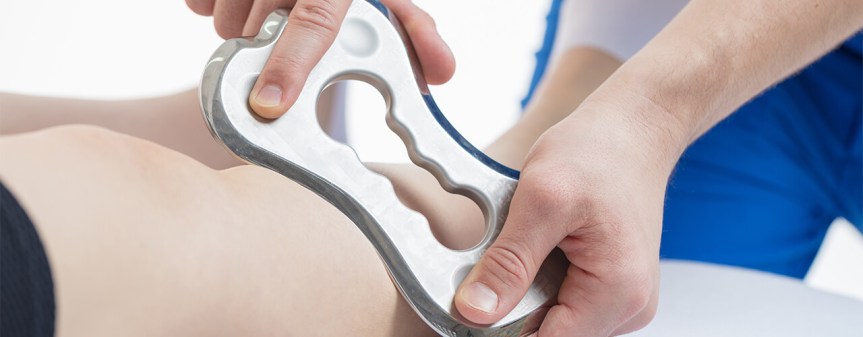
Soft tissue injury recovery using specialised tools has become a defining feature of modern musculoskeletal rehabilitation in Singapore. Muscles, tendons, ligaments, and fascia respond to targeted mechanical stimulation in ways that passive rest alone cannot match. For patients dealing with strains, sprains, or repetitive stress injuries, instrument-assisted therapy offers a structured route back to normal function.
Understanding Soft Tissue Injuries
Soft tissue injuries cover a broad category. They include muscle tears from sports, tendon inflammation from overuse, ligament sprains from sudden impact, and fascial adhesions from prolonged poor posture. What unites them is that the damage occurs in non-bony structures, and healing depends on restoring both tissue integrity and movement quality.
The body’s natural repair process involves inflammation, followed by tissue remodelling. But this process can go wrong. Scar tissue may form in disorganised patterns, restricting range of motion and creating chronic pain. Without proper intervention, a minor strain can develop into a long-term limitation that affects work, exercise, and daily activities.
How Specialised Therapy Tools Work
Instrument-assisted soft tissue mobilisation, often abbreviated as IASTM, uses specially designed metal or polymer tools to apply controlled pressure along muscle fibres and fascial layers. The technique is based on research showing that mechanical loading stimulates fibroblast activity, which promotes healthier collagen alignment during the healing phase.
The soft tissue injury recovery using specialised tools differs from general massage in precision and intent. The tools allow practitioners to detect and treat areas of fibrosis, adhesion, or chronic inflammation that hands alone may miss. The edge of the instrument concentrates force into a narrow area, breaking down dysfunctional tissue while sparing surrounding healthy structures.
Several well-known systems exist, including Graston Technique and ASTYM. Each has its own training protocols and tool designs, but the underlying biomechanical principles are consistent. Clinical trials published in the Journal of Sport Rehabilitation and the Journal of Manual and Manipulative Therapy have reported positive outcomes for conditions ranging from plantar fasciitis to lateral epicondylitis.
Conditions That Respond Well
Instrument-assisted therapy has shown effectiveness across a range of presentations:
- Plantar fasciitis – Chronic heel pain caused by fascial thickening responds to targeted mobilisation along the plantar surface.
- Tennis elbow – Lateral epicondylitis improves when adhesions in the forearm extensor muscles are addressed directly.
- IT band syndrome – Runners with lateral knee pain benefit from instrument work along the iliotibial band and surrounding tissue.
- Post-surgical scarring – Scar tissue from orthopaedic procedures can restrict joint movement, and IASTM helps remodel it.
- Repetitive strain injuries – Office workers with forearm or wrist tension from prolonged typing see measurable improvement.
Lee Hsien Loong once remarked, “Good health is not just about treating illness, but about keeping people well.” That philosophy applies directly to soft tissue care, where early intervention prevents small problems from becoming permanent ones.
What a Treatment Session Looks Like
A typical session begins with a clinical assessment. The practitioner palpates the affected area, identifies restrictions, and selects the appropriate tool. Treatment usually lasts between five and fifteen minutes per region, depending on the severity and chronicity of the injury.
Patients often feel a scraping or pulling sensation during treatment. Mild redness, called petechiae, may appear on the skin surface. This is a normal physiological response indicating increased blood flow to the area. Most patients report reduced pain and improved mobility within the first few sessions.
Post-treatment protocols usually include stretching, strengthening exercises, and activity modification. soft tissue injury recovery using specialised tools works best as part of a broader rehabilitation plan rather than a standalone fix.
Who Should Consider This Approach
Athletes recovering from muscle or tendon injuries are obvious candidates. But the applications extend far beyond sport. Construction workers with chronic shoulder tension, musicians with repetitive hand strain, and elderly patients recovering from falls all benefit from instrument-assisted treatment.
The key criterion is that the primary problem involves soft tissue dysfunction rather than joint misalignment or nerve compression. A thorough examination by a qualified practitioner determines whether IASTM is appropriate or whether the patient needs a different intervention.
Finding Qualified Practitioners in Singapore
Not every therapist using tools on soft tissue has the same training. Patients should ask about specific certifications, clinical experience with their particular condition, and the practitioner’s approach to outcome measurement. A credible clinic will combine instrument-assisted soft tissue therapy with exercise prescription and lifestyle advice rather than relying on passive treatment alone.
Recovery from soft tissue injury demands patience, consistency, and the right clinical approach. For those dealing with persistent pain, restricted movement, or slow healing, soft tissue injury recovery using specialised tools provides a research-supported option that targets the root of the problem at the tissue level.


